
Why a Real Director Is Essential to AI Animation — and Why It Gives Acclaimed Media a Powerful Competitive Advantage
Artificial intelligence is transforming animation.
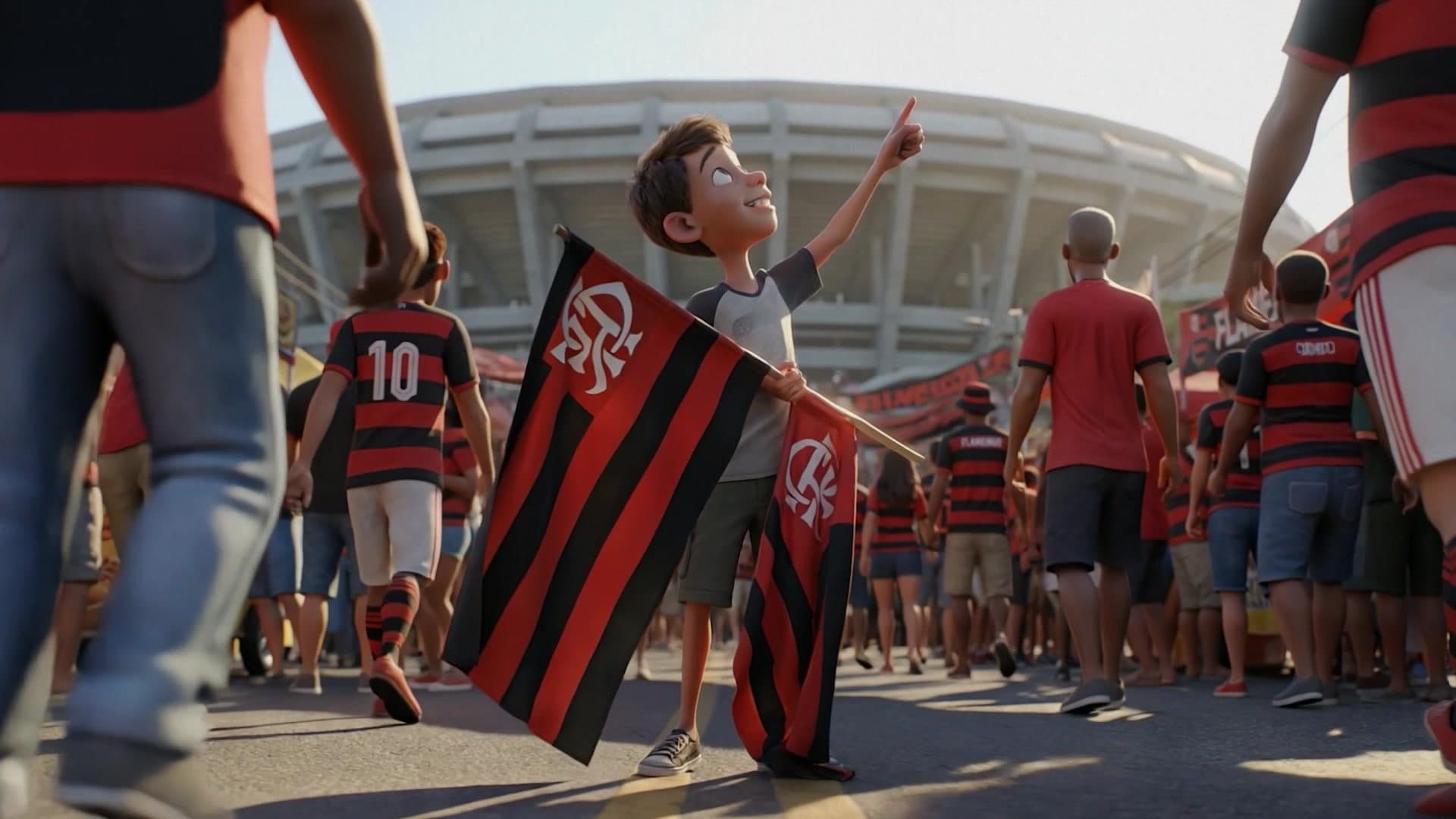
Productions that once required large teams, lengthy schedules and substantial budgets can increasingly be created using sophisticated AI tools. Character development, environments, animation, visual effects, voices and many other elements of production can now be accelerated dramatically.
But there is an important distinction that the industry needs to understand and that is that AI can create animation. It cannot, by itself, direct a film and that distinction could become increasingly important as the volume of AI-generated content grows.
At Acclaimed Media, we believe the future of premium AI animation is not about replacing filmmakers with technology. It is about combining the extraordinary capabilities of AI with experienced human creative leadership and at the centre of that process is the Director.
AI Is a Production Tool, Not a Storyteller. Generative AI can produce remarkable images and sequences and give it the right instructions and it can create characters, locations, camera movements and effects that would previously have required teams of specialist artists.
However, a successful animated film or television series is much more than a collection of impressive images.
Someone has to decide Why is the camera here? What should the audience be feeling? Should this moment be funny, frightening, exciting or emotional?
How long should we remain on a character's face before cutting away? Should the music begin now—or would silence be more powerful? Is the performance believable? Does the scene advance the story? but Most importantly: will an audience care what happens next?
These are directing decisions and whilst AI can provide increasingly sophisticated creative possibilities, but somebody still needs to make thousands of interconnected decisions that turn those possibilities into a coherent film.
Every successful film needs a single creative vision and the director provides that vision because without one, AI production can easily become a sequence of individually impressive shots that do not feel as though they belong to the same movie.
An experienced director sees the entire production, they understand the screenplay, performances, characters, cinematography, editing, music, sound and emotional journey of the audience. They know where the story is going before an individual scene is created and this becomes particularly important with AI.
AI offers almost unlimited possibilities but unlimited possibilities can actually make strong creative leadership more important, not less important.
Someone needs to say “This is the film we are making”. The director becomes the person who controls those possibilities and converts them into a consistent creative vision.
Animation is ultimately about performance and directing performance still matters. Whether a character is a human being, an animal, a fantasy creature, a racing car or a talking fish, audiences need to believe that character has emotions, motivations and personality.
A director understands performance, a small hesitation before a character speaks can communicate uncertainty. A glance between two characters can establish affection. Holding a reaction for another second can transform an ordinary moment into comedy.
These are subtle decisions, but they are often the difference between animation that merely moves and characters that feel alive.
AI can generate the movement but a director gives that movement meaning because directors understand audiences
In this respect, one of the greatest skills of an experienced director is understanding how an audience experiences a story and this is particularly important in children's and family entertainment. A scene intended for a four-year-old requires very different pacing from one designed for teenagers or adults.
Comedy has to be timed correctly. Emotional moments need space. Action sequences need clarity and the director is constantly considers the audience. Are children still following the story? Is the villain frightening without becoming too frightening? Has the joke been established clearly enough? Is the emotional payoff working?
AI does not sit in a cinema and feel an audience laugh, become silent, restless or emotional Directors do and Experienced filmmakers have spent their careers learning those reactions and that experience remains extraordinarily valuable.
One of the most underestimated elements of filmmaking is taste and technology does not replace taste.
AI may generate ten versions of a scene but the important question is not whether it can generate them the important question is which one is right and that decision requires judgement.
Experienced directors have developed creative judgement through years of filmmaking—working with writers, actors, animators, cinematographers, editors, composers and producers and as AI makes content easier to produce, that judgement will actually become more valuable.
The technological barrier to creating animation is falling, the creative barrier to creating great entertainment remains.
Why This Is a Major USP for Acclaimed Media and indeed, creates an important opportunity for Acclaimed Media.
Many emerging AI production companies are fundamentally technology businesses. Their expertise lies in prompts, workflows, models, automation and generating increasingly impressive images but Acclaimed Media positions itself differently. We are not simply using AI to generate content, we are using AI to make professionally directed films and television series.
That is a fundamentally different proposition.
Our model combines the speed, flexibility and cost advantages of AI production with the experience and judgement of established filmmakers and the technology sits behind the creative process rather than replacing it.
This gives Acclaimed Media an important USP when speaking with broadcasters, streaming platforms, distributors, investors, licensors and major intellectual-property owners.
They are not simply being offered an AI-generated production, they are being offered a professionally directed production made using AI technology and that distinction matters and it Also Protects Valuable Intellectual Property
This approach becomes even more important when working with established brands, creators and intellectual property.
An IP owner does not simply want to know whether an AI company can reproduce its characters they want confidence that those characters will be treated correctly, that their personalities will remain consistent, that the humour will feel authentic, will the story respect the existing audience and will the finished production enhance rather than damage the brand?
Putting an experienced director in creative control provides another layer of professional oversight and for Acclaimed Media, this can become an important part of the proposition when approaching major rights holders. Give us your valuable IP and we will combine next-generation production technology with experienced filmmaking leadership.
AI Changes the Economics — Directors Protect the Quality
The attraction of AI animation is obvious, it changes the economics and the directors protect the quality. Production can potentially become faster, more flexible and considerably less expensive and smaller creative teams can attempt projects that previously required enormous production infrastructures.
But reducing production costs cannot mean reducing creative standards, the objective should not be to produce something that looks impressive for an AI film, the objective should be to produce something that audiences judge alongside traditionally produced entertainment and that requires professional filmmaking disciplines in terms of writing. directing, editing, music, sound. Performance and storytelling
AI changes how the film is manufactured, it does not change why audiences watch it because the future is human creativity amplified by AI
There is a temptation to describe the future of entertainment as a battle between humans and artificial intelligence but we believe that misses the point. The real opportunity is combining them.
AI gives filmmakers extraordinary new capabilities. It can reduce costs, accelerate production and allow creators to explore ideas that previously might have been economically impossible but technology still needs creative leadership.
That is why Acclaimed Media's philosophy is straightforward:
AI provides the tools.
Filmmakers provide the vision.
Directors bring everything together.
As AI-generated content becomes increasingly common, audiences, distributors and IP owners will need ways of distinguishing professionally produced entertainment from the enormous volume of content that technology will make possible and that is where Acclaimed Media have established an important position. We are not attempting to remove filmmakers from filmmaking, we are giving experienced filmmakers an entirely new production platform.
And that could ultimately prove to be one of the most powerful advantages of AI animation.